

Freshwater vs. Gulf access: the first split
Freshwater canals can be great for views, kayaks, paddleboards, fishing and a quieter backyard-water feel, but they do not provide boating access to the Gulf. Gulf-access canals connect to open water, but “Gulf access” by itself does not tell you how practical the route is for your boat.
Two homes can both be marketed as waterfront and deliver completely different experiences. Before I treat a listing as a real candidate, I want to verify the canal system and the route for that exact property.
Bridge clearance can eliminate a home before the showing
Bridge restrictions are one of the easiest details to miss when scrolling listings. A home can have Gulf access and still be a bad fit for a taller center console, T-top, hardtop or sailboat. The important number is not the bridge closest to the house — it is the lowest bridge on the entire route.
Boat height is only one part of the equation. Beam, draft, tides, canal width, turning room and the lift or dock setup can matter too. For waterfront buyers, the boat specifications belong in the search criteria right alongside price and bedrooms.
Use the canal map as a screening tool
- Identify the canal system. Start by determining whether the property is freshwater or connected to a Gulf-access route.
- Trace the complete route. Follow the water from the property toward the river or open water rather than stopping at the first canal intersection.
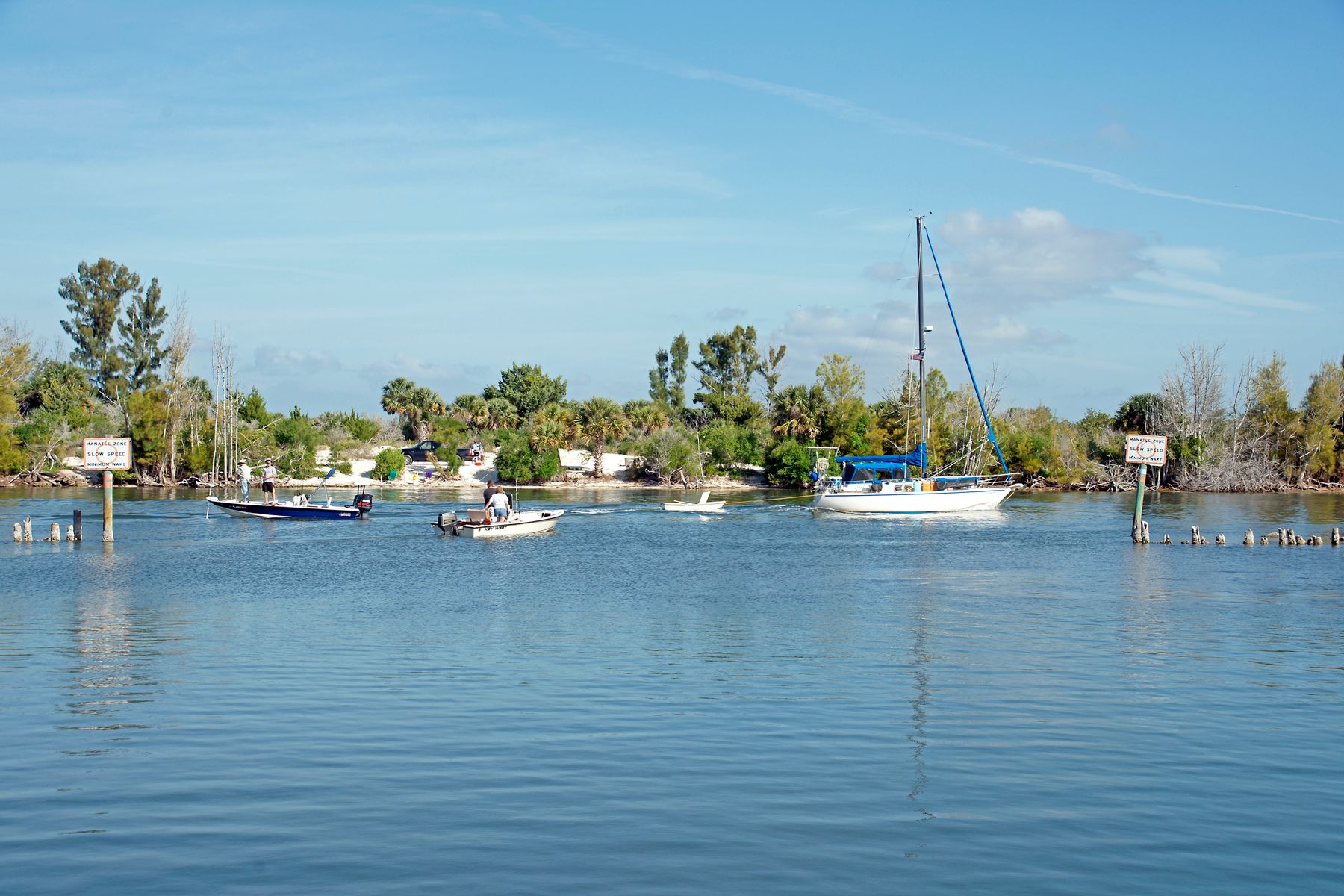
- Look for restrictions. Note bridges, water-depth concerns, no-wake areas and any other points that can affect boat size or travel time.
- Compare the route with your boat. Use actual height, beam and draft — not a rough guess.
- Inspect the expensive waterfront pieces. Seawall, dock and lift condition can change the economics of an otherwise great house.
Travel time matters almost as much as access
Some buyers want the fastest possible run to open water. Others care more about the house, neighborhood or price and do not mind a longer idle through canals and no-wake zones. Neither choice is automatically better. The right answer depends on how often you boat and what you want the property to do for you.
That is why I prefer to talk in terms of usable access rather than simply “Gulf access.” A route that technically reaches open water may still be a poor match for the buyer’s boat or lifestyle.
Do not stop at the water: check the seawall, dock and lift
The canal view is easy to love. The expensive infrastructure is easier to overlook. Seawalls, docks and lifts deserve property-specific review because age, condition, permitting and replacement needs can materially affect ownership cost.
When a waterfront property gets serious, I also want the buyer looking at flood zone, elevation, insurance considerations, utilities and assessments. The goal is not to scare anyone away from waterfront living; it is to understand the whole property before the contract becomes expensive to unwind.
Canal map questions I get all the time
How do I know if the home is truly Gulf access?
Confirm the canal type and trace the full route to open water. Listing remarks are a starting point, not the final verification.
How do I know if my boat will fit under the bridges?
We identify the most restrictive bridge on the route and compare it with your boat's actual height. For some boats, an inch can matter.
Are freshwater canals a bad choice?
Not at all. They can be a great fit if you want the water view, kayaking, fishing or a waterfront backyard without needing to boat to the Gulf.
What else should I verify before offering?
Route, bridge restrictions, seawall, dock, lift, flood/elevation, insurance considerations, utilities and any property-specific assessments or permits.