
 Facebook
 X
X
 Pinterest
 Copy Link

Updated for 2026. Buyer-focused answers. Seller strategy. Real-world connection costs. Clear next steps.
Jump to:
Cape Coral UEP costs can feel like a moving target if you’re buying or selling in Northwest Cape Coral. That’s normal. However, once you understand the categories, the deadlines, and how buyers think about assessments, you can negotiate with confidence instead of panic-Googling at midnight.
UEP Timeline for Northwest Cape: What “Phase” Means in Real Life
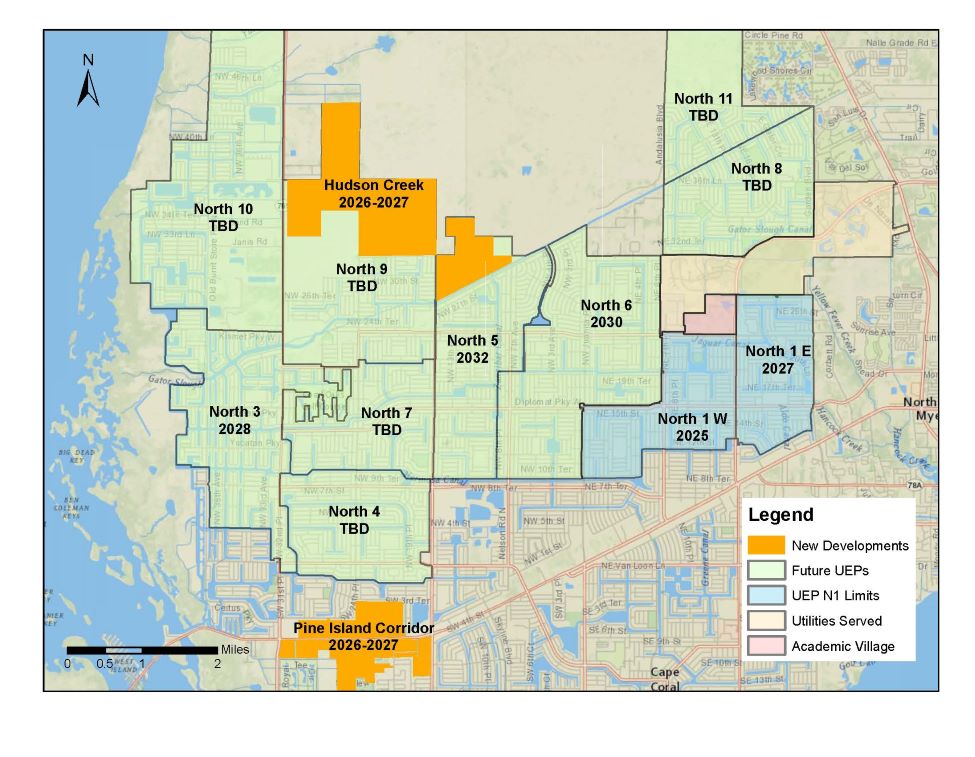
UEP rolls out in phases (North 1 West, North 1 East, North 3, North 6, North 5, etc.). Each area has its own design timeline, construction schedule, and assessment setup. That’s why two homes a mile apart can have totally different “utility reality.”
How to use the timeline like a pro: Instead of asking “When does NW Cape get utilities?” ask: “What UEP area is this address in, and what’s the current status: design, bidding, construction, or available?” That single change saves buyers and sellers a ton of confusion.
What Cape Coral UEP Costs Include in Northwest Cape
Real Numbers (City-Published Examples):
These are commonly referenced, City-published figures for a typical Equivalent Parcel (E.P.) lot and a typical residential 5/8” meter.
Rates can change by project area and effective date, so always verify for your specific parcel.
A) Assessment / Line Extension (CIAC) Examples (Per Equivalent Parcel)
Note: These CIAC amounts are shown by the City as “per Equivalent Parcel” examples for the listed effective dates. Always confirm your specific parcel and project area before budgeting.
B) CFEC (Capital Facility Expansion Charge) Example (Typical Residential)
For a typical residential parcel with a 5/8” meter receiving all three utilities, the City lists the CFEC components as:
- Water: $1,106
- Sewer: $3,390
- Irrigation: $2,254
- Total CFEC: $6,750
Quick reality check: When people say “UEP is around $30K+,” they’re often mentally combining an assessment/CIAC-style figure plus CFEC for a typical lot. Your exact number depends on your parcel and phase.
C) Typical Connection Costs (What You Pay to Hook Up)
Once utilities are available, improved properties typically must connect within 180 days of the NOA. Budget for both plumber work and City fees:
Connection amounts are City-published “typical” estimates and can vary by property conditions and service size.
When people say “UEP costs,” they usually mean one thing. In reality, there are two separate buckets. Because of that, understanding Cape Coral UEP costs early prevents negotiation surprises later.
1) City Infrastructure Assessments (the neighborhood buildout)
This is the City portion that funds the big work: water, sewer, and often irrigation infrastructure in the area. In many cases, it’s financed on the property tax bill as a non-ad valorem assessment over a long term (often 20–30 years depending on the area/program).
2) Connection Costs (the property hookup)
Once service is available, owners typically pay for the physical connection: plumber work, septic abandonment, meter install, and possibly deposits. This part is where buyers get surprised if they didn’t ask early.
Cape Coral UEP Costs for Buyers: Checklist & Offer Strategy
If you’re buying in NW Cape, your goal is simple: know what you’re inheriting before you sign. That means asking the right questions early.
Buyer Checklist: 7 Questions to Ask Before You Offer
- Which UEP area is this address in? (North 1 West vs North 3 can be a totally different story.)
- Is there an outstanding assessment balance? If yes, what’s the remaining principal and annual payment?
- Has the home connected to city water/sewer/irrigation yet?
- If not connected, is there a 180-day NOA deadline pending? (This can change your cash planning.)
- Does the property still use septic/well? If yes, when were they last serviced?
- Is irrigation connection required for this parcel? (Rules can differ by area.)
- How will we handle assessments in negotiation? Seller payoff, credits, or price adjustment?
Offer Strategy (Simple + Effective)
In many transactions, the cleanest way to reduce buyer anxiety is to treat utilities like a line item:
- If utilities are paid off: highlight it as a value feature.
- If there’s a balance: negotiate it like a known cost (payoff, credit, or pricing).
- If connection is not complete: budget connection costs and timeline risk upfront.
Quick poll: If you’re buying, what’s your biggest concern?
- A) Monthly payment impact
- B) Surprise balance at closing
- C) Connection deadline + costs
- D) I just want to know what’s “normal”
Text me your letter choice and I’ll tell you the smartest next step for that scenario.
Cape Coral UEP Costs for Sellers: How to Market Utilities Without Losing Money
Sellers win with UEP when they control the narrative. The market doesn’t hate utilities — it hates surprises. Therefore, clarity protects your equity.
If Utilities Are Installed and Paid Off
- Lead with it in MLS remarks: “City water/sewer connected + assessments paid.”
- Buyers love predictable: no septic roulette, no well pump mystery.
- Use it to justify price positioning compared to septic/well comps.
If There’s an Outstanding Assessment Balance
- Get the numbers early: remaining principal + annual tax payment.
- Decide your strategy before listing: payoff at closing vs credit vs pricing.
- Have a simple “one-pager” ready for showings.
If Utilities Are Coming Soon (Pre-Availability)
- Be honest about construction timelines and disruption.
- Position it as “future-proofing.”
- Set expectations on negotiations.
Reality: Utilities can improve marketability, but value impact depends on remaining balance and neighborhood comps.
Quick Math: Estimating Out-of-Pocket Costs
Here’s a simple framework buyers and sellers can use to avoid surprises:
- Assessment: What’s the remaining balance? What’s the annual payment?
- Connection: Plan for plumber hookup + septic abandonment + meter + deposits.
- Monthly: Budget for water/sewer billing after connection.
Rule of thumb: If the property is not connected yet, build in a cash cushion.
FAQs (Click to Expand)
How are UEP assessments usually paid?
Most commonly, they appear as non-ad valorem assessments on the property tax bill over a multi-year term.
Can a seller pay off the balance at closing?
Often yes — and it can be a strong negotiation tool.
Is irrigation always required?
Requirements can vary by area. Always verify the specific parcel.
FREE DOWNLOAD: UEP Buyer & Seller Checklist
Want the short version you can save or send to a spouse or lender?
Need Help Verifying Utilities Before You Buy or Sell?
Buyers: BigCHomes.com/search
Sellers: What’s My Home Worth?
Relocating: Moving to Cape Coral
Chris Coultas, REALTOR®
Coldwell Banker Realty
Call/Text: 239.201.9999
YouTube: youtube.com/@chriscoultasrealtor
Website: BigCHomes.com


